ARTICLEIndia's Racing Odyssey: From Dusty Tracks to the Global Grid – Formula 1

From dusty rally tracks in Coimbatore to podiums on Formula 1’s grandest stages, India’s journey into elite motorsport is a story of ambition, breakthroughs, and heartbreak. This feature traces Narain Karthikeyan’s historic F1 debut, the rise and fall of the Indian-owned Force India team, the fleeting glory of the Indian Grand Prix, and the drivers who carried the tricolour through Formula racing. A tale of speed, struggle, and a nation learning to dream beyond cricket.

India's Racing Odyssey: From Dusty Tracks to the Global Grid – Formula 1

In the heart of a nation where cricket reigns supreme and the roar of engines has long been drowned out by the cheers of stadium crowds, a quiet revolution began to stir in the early 2000s. India, a country of over a billion dreams, was about to accelerate into the high-octane world of Formula racing. This is the story of pioneers who defied odds, a fleeting Grand Prix that captured imaginations, an Indian-owned team that punched above its weight, and the enduring impact of speed on a society in motion. Like a documentary unfolding frame by frame, we’ll trace the tire marks left by Indian drivers and teams on the international stage, from Formula 1’s pinnacle to the feeder series below, and explore how this elite sport has reshaped perceptions, economies, and aspirations back home.

The Trailblazer: Narain Karthikeyan’s Historic Lap

Our narrative begins in Coimbatore, Tamil Nadu, where a young Kumar Ram Narain Karthikeyan first felt the pull of the pedal. Born in 1977, Karthikeyan grew up in a family with motorsport in its veins—his father was a rally driver. But Narain’s ambitions stretched beyond India’s dusty rally circuits. He ventured to Europe in the late 1990s, honing his skills in British Formula Ford and Formula 3. In 2000, he became the first Indian to win the British Formula Ford Winter Series, marking him as a prodigy.

By 2005, history was made. Karthikeyan debuted in Formula 1 with Jordan at the Australian Grand Prix, becoming India’s first F1 driver. It was a “wild journey,” as he later described it, fraught with challenges in a mid-tier team. His standout moment came at the controversial 2005 United States Grand Prix, where he finished fourth, scoring five points—his only career tally in F1. After a hiatus, he returned in 2011-2012 with HRT, starting 46 races overall but often battling at the back. Karthikeyan’s legacy? He shattered barriers, proving Indian talent could compete at motorsport’s apex. “I just wanted to race,” he reflected in a Reddit AMA, inspiring a generation.

Following closely was Karun Chandhok, who debuted in 2010 with HRT, adding another chapter to India’s F1 story. Together, they represented a nascent era, but India’s F1 footprint extended far beyond drivers to ownership and team identity.

The Indian Flag on the Grid: Force India and Sahara Force India

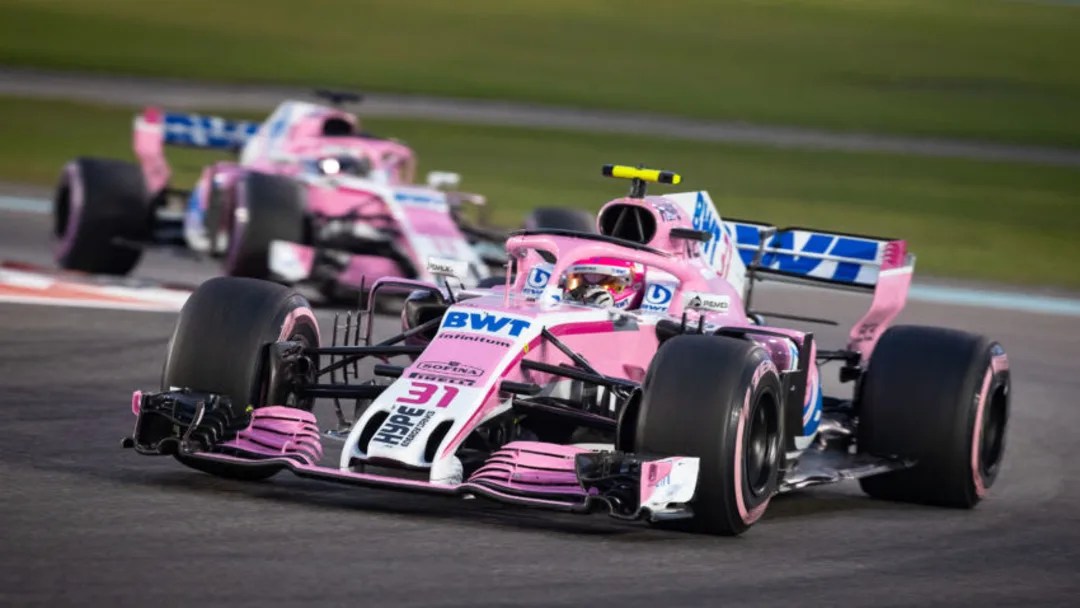
The most prominent symbol of India’s ambition in Formula 1 arrived in 2008 with Force India Formula One Team. Founded when Indian businessman Vijay Mallya, in partnership with Dutch entrepreneur Michiel Mol, acquired the struggling Spyker F1 team for €88 million, the squad rebranded and raced under an Indian license. Mallya, known as the “King of Good Times,” envisioned putting India on the global motorsport map. The team debuted at the Australian Grand Prix, marking the first time an Indian-owned constructor competed in F1.

Force India quickly established itself as a plucky midfield contender. Powered by Mercedes engines from 2009 onward, it scored its first pole (2009 Belgian GP with Giancarlo Fisichella), podiums, and consistent points. The team’s high point came in 2016 and 2017, finishing fourth in the Constructors’ Championship both years—the best results for any Indian-linked team in F1 history.

In 2011, Sahara India Pariwar (led by Subrata Roy) acquired a 42.5% stake for around $100 million, leading to the rebranding as Sahara Force India. The team retained its competitive edge, with drivers like Sergio Pérez delivering multiple podiums (including a memorable second place at the 2016 Monaco GP). For a decade, Force India/Sahara Force India represented pride for Indian fans, blending international talent with national branding.

However, the story took a dramatic turn. Financial troubles mounted amid legal issues surrounding owners Vijay Mallya (facing fraud allegations and fleeing to the UK) and Subrata Roy (jailed in India over investor disputes). By mid-2018, the team entered administration, owing millions to creditors (including Pérez, who triggered the process). The FIA allowed a consortium led by Canadian billionaire Lawrence Stroll to rescue the assets. The original entry was excluded, but a new entity—Racing Point Force India—took over from the Belgian Grand Prix, starting on zero points but retaining the core team, staff, and cars. This mid-season transition kept the Silverstone-based outfit alive, though it marked the end of the “Force India” era under Indian control.

In 2019, the team dropped the “Force India” name entirely, becoming Racing Point F1 Team (later evolving into Aston Martin). The saga highlighted the challenges of sustaining an F1 team—immense costs, sponsorship reliance, and geopolitical/legal hurdles—but also showcased India’s potential to compete at the highest level.

The Grand Spectacle: Birth and Demise of the Indian Grand Prix

No tale of India in Formula racing is complete without the Buddh International Circuit—a $400 million marvel in Greater Noida, designed by Hermann Tilke. Inaugurated in 2011, it hosted the first Indian Grand Prix on October 30, amid cheers from thousands and a wave from cricket legend Sachin Tendulkar. Sebastian Vettel dominated, winning all three editions (2011-2013), with the event drawing global stars and boosting tourism.

Yet, the dream sputtered. Tax disputes classified F1 as “entertainment” rather than “sport,” imposing heavy duties on teams and organizers. Political hurdles in Uttar Pradesh and bureaucratic red tape led to its suspension in 2014, with promises of a 2015 return that never materialized. The circuit, once alive with V8 symphonies, fell silent for F1, though it hosted MotoGP in 2023. As one observer noted, it became a “graveyard where Indian Grand Prix dreams crashed.”

Descending the Ladder: India’s Presence in Formula 2 and Beyond

While F1’s spotlight dimmed for Indian ownership, drivers continued the charge. Mahaveer Raghunathan embodied resilience with his F2 stint and later GT successes. Jehan Daruvala shone in F3 and F2 before moving to Formula E. Kush Maini made history in 2025 as Alpine’s reserve driver—the first Indian in an F1 role since 2012—while racing in F2.

Ripples of Speed: The Broader Impact on India

Force India’s decade-long run generated massive visibility, inspiring karting academies and shifting cultural focus from cricket. The Grand Prix and team efforts boosted tourism, jobs, and infrastructure. Yet, controversies around Mallya and Roy underscored policy and financial challenges. Today, Netflix’s Drive to Survive and events like Red Bull’s Mumbai Showrun have revived fandom.

Looking Ahead: A Return to the Grid?

With rising talents, MotoGP at Buddh, and whispers of F1’s return, India’s chapter is accelerating. From Karthikeyan’s debut to Force India’s podiums and dramatic rescue, the journey proves speed knows no borders—only checkered flags waiting to be claimed.

ಈ ಲೇಖನವನ್ನು ಹಂಚಿಕೊಳ್ಳಿ